
What Is A Putz House?
The Story of these glittery Holiday Decorations
Maybe you spotted a vintage house in an antique shop or admired a tiny village under a friend's Christmas tree & wondered what those glittery little houses were called. Maybe you just love vintage Christmas and you’re always looking to add nostalgic touches to your Christmas decor. Whatever the reason for your curiosity, I’m so glad you’re here to find out more about where they originated & how they’ve become part of our holiday traditions!
so what are Putz Houses?
Putz houses are small cardboard or heavy paper Christmas houses, usually covered in glitter and "snow," with small trees & a light hole to place some type of light inside. The houses are usually grouped in a miniature village — under a tabletop Christmas tree, on a fireplace mantel, or a snowy holiday centerpiece. Classic vintage putz houses are only a few inches tall & for me that’s part of their charm. They're little, glittery & so festive when the windows are lighted!
What Does Putz Mean?
I’ve answered more than a few emails from upset customers wondering why on earth I call these cute little paper houses by that name. The word "putz" comes from the German word “putzen”, meaning "to decorate or adorn."
The putz tradition has deep roots in a Central European Protestant community of Moravians, who settled in Pennsylvania in the 1700 — 1800s. These early "putz" were elaborate miniature scenes telling the Christmas story, built around a nativity. Families spent weeks putting their putz together, arranging miniature figures among moss, twigs, and stones collected from outdoors. Then in the days before Christmas they would visit & admire each other's scenes, trading ideas & inspiration for next year. The Moravians called it "putzing." and we carry on that tradition of “putzing around “arranging & decorating our little holiday village scenes.
A Brief History of Putz Houses
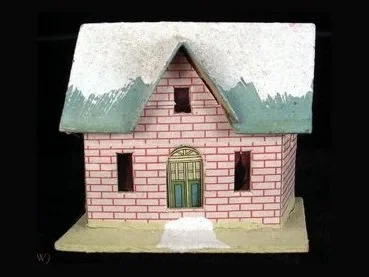
From the late 1800s thru the 1920s, most putz houses were actually small house-shaped candy boxes, filled with sweets that were sold & displayed as Christmas Villages.
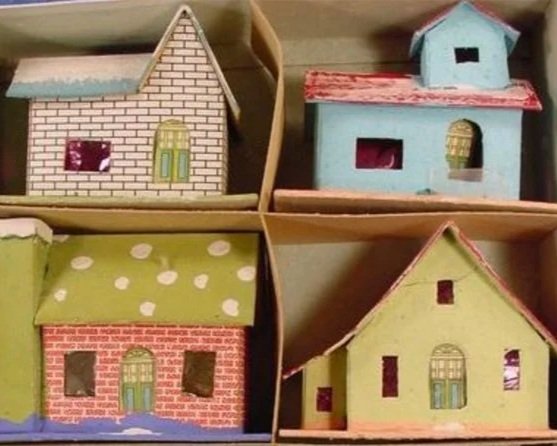
Around 1928 electric Christmas lights became affordable. Japanese manufacturers began making sets of glittered cardboard houses for American dime stores like Woolworths, adding a hole in the back for a Christmas bulb and cellophane windows that glowed when the house was lighted. The 1929 Montgomery Ward & Sears & Roebuck catalogues advertised colorful Christmas Villages to go over lights.
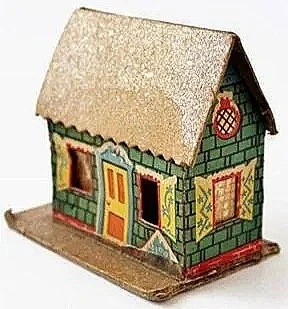
In the 1940s World War II interrupted Japanese imports & North American companies like Colmor & Dolly Toys created simpler versions, to worki around wartime material shortages like cellophane and ink.
After World War II, Japanese imports resumed and putz villages filled the five-and-dime stores again. If you grew up in the 1950s or 60s, your family may have had one! Their popularity slowly faded through the ‘60s, but vintage putz houses are treasured collectibles today and a whole new generation of crafters are enjoying a nostalgic resurgence of these little villages and crafting together at the holidays.
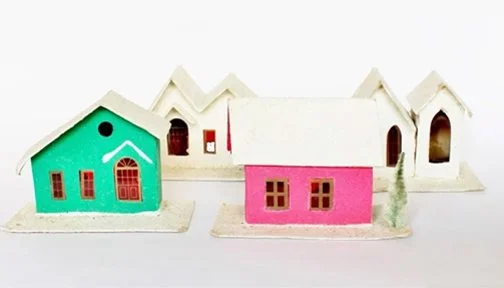
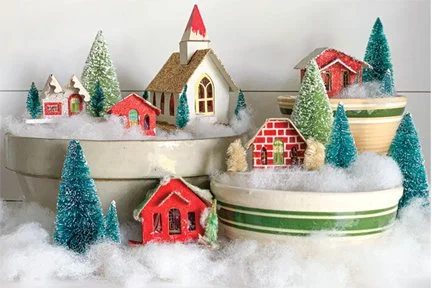
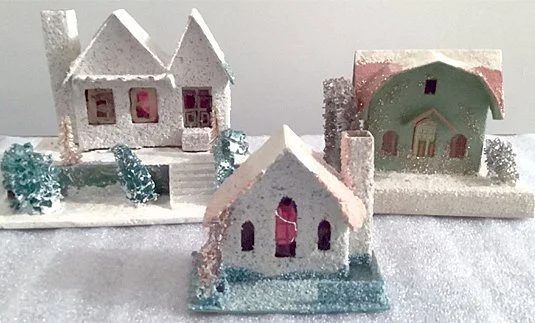
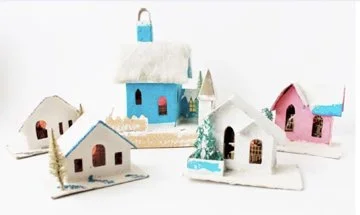
How to Spot a Vintage Putz House
If you think you might have some vintage putz houses of your own, here are a few clues to look for but keep in mind, these features appear on newer handmade houses too!
Thin cardboard or pasteboard construction — made to be affordable, not heirlooms
Glitter and mica "snow" — that sparkly vintage finish, often yellowed beautifully with age
Cellophane windows — some have printed details
A larger hole in the back — sized for larger old-fashioned Christmas light bulbs
Bottle brush trees or tiny pinecones — classic landscaping
"Japan" stamped on the bottom — many mid 1900s houses were made in Japan
If you're lighting vintage houses, be sure to use a modern battery operated tealight, not old style hotter bulbs to be safe with the fragile old cardboard walls and prevent any chance of fire.
How People Display Putz Villages Today
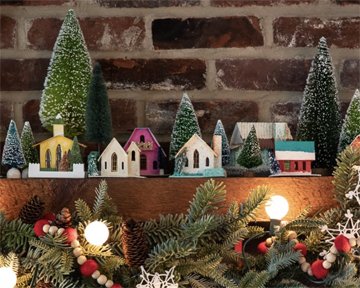
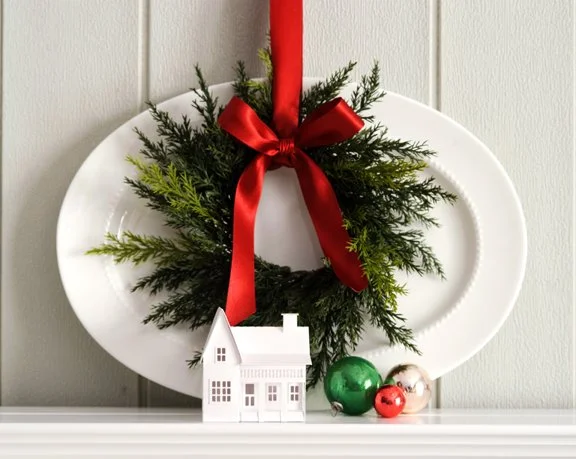
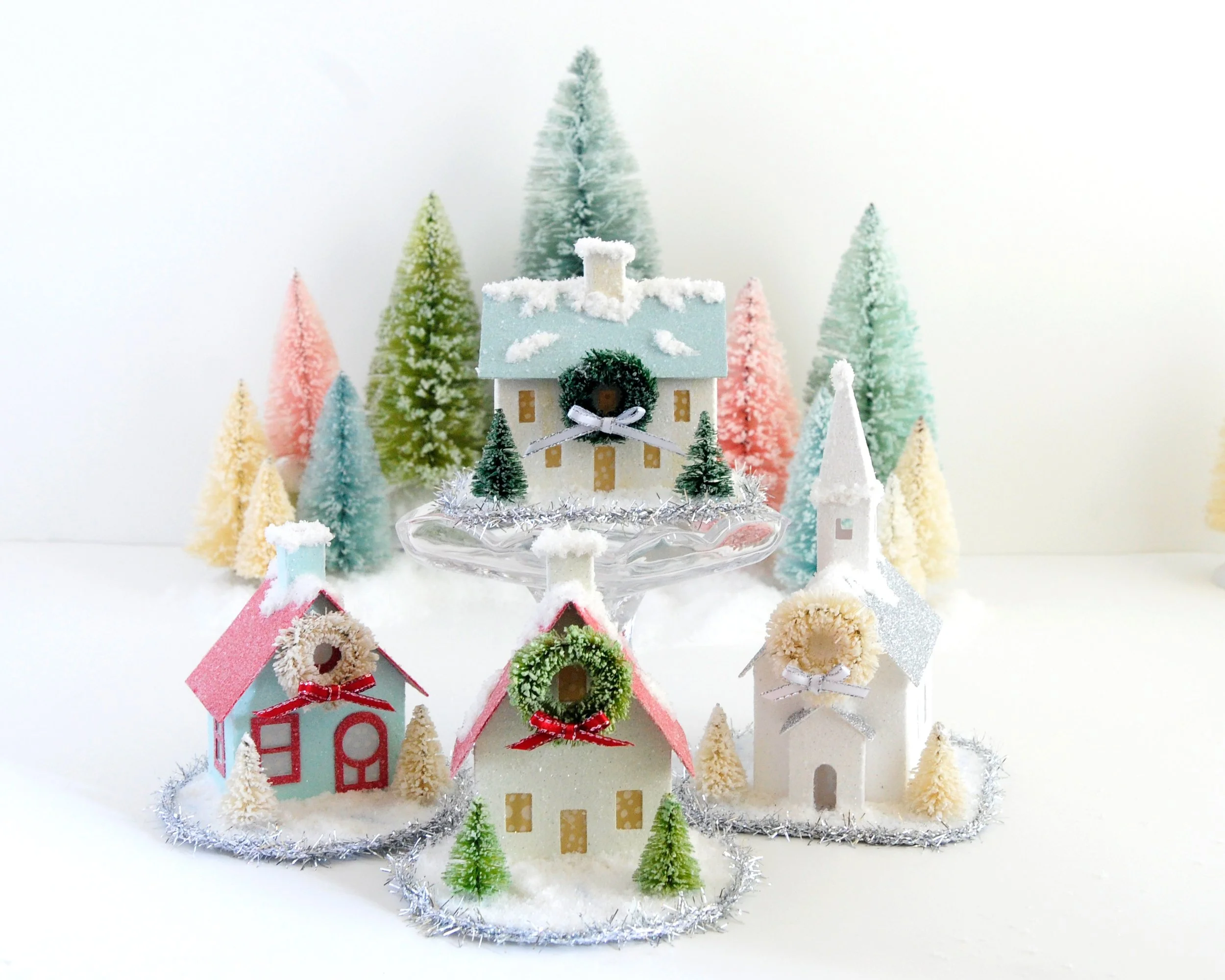
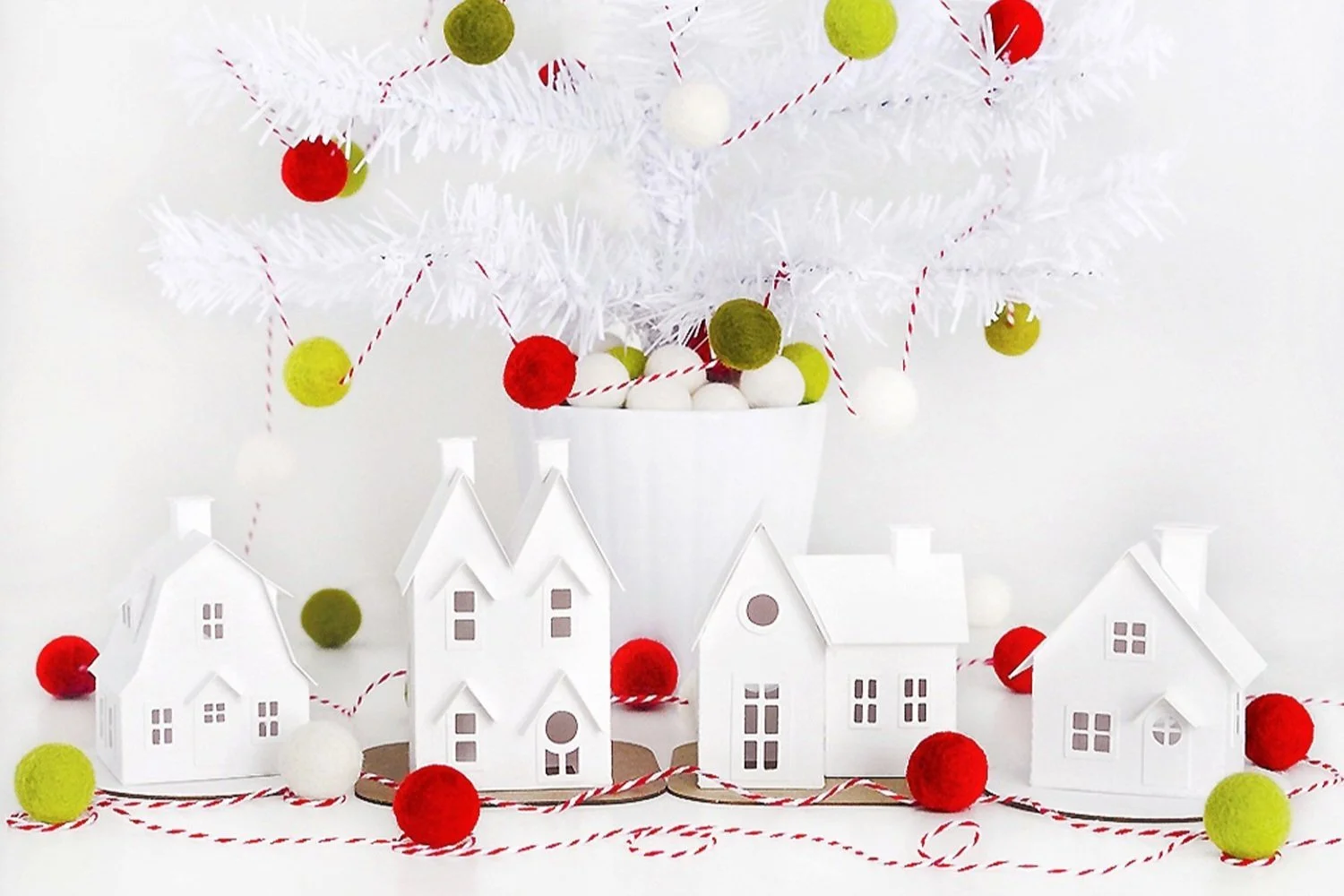
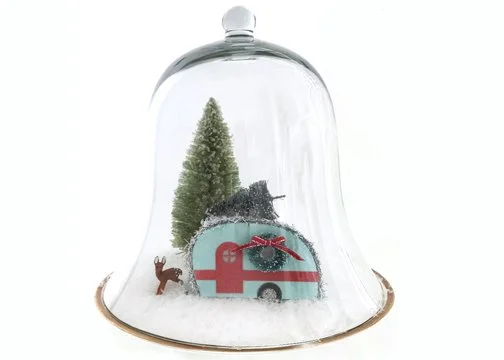
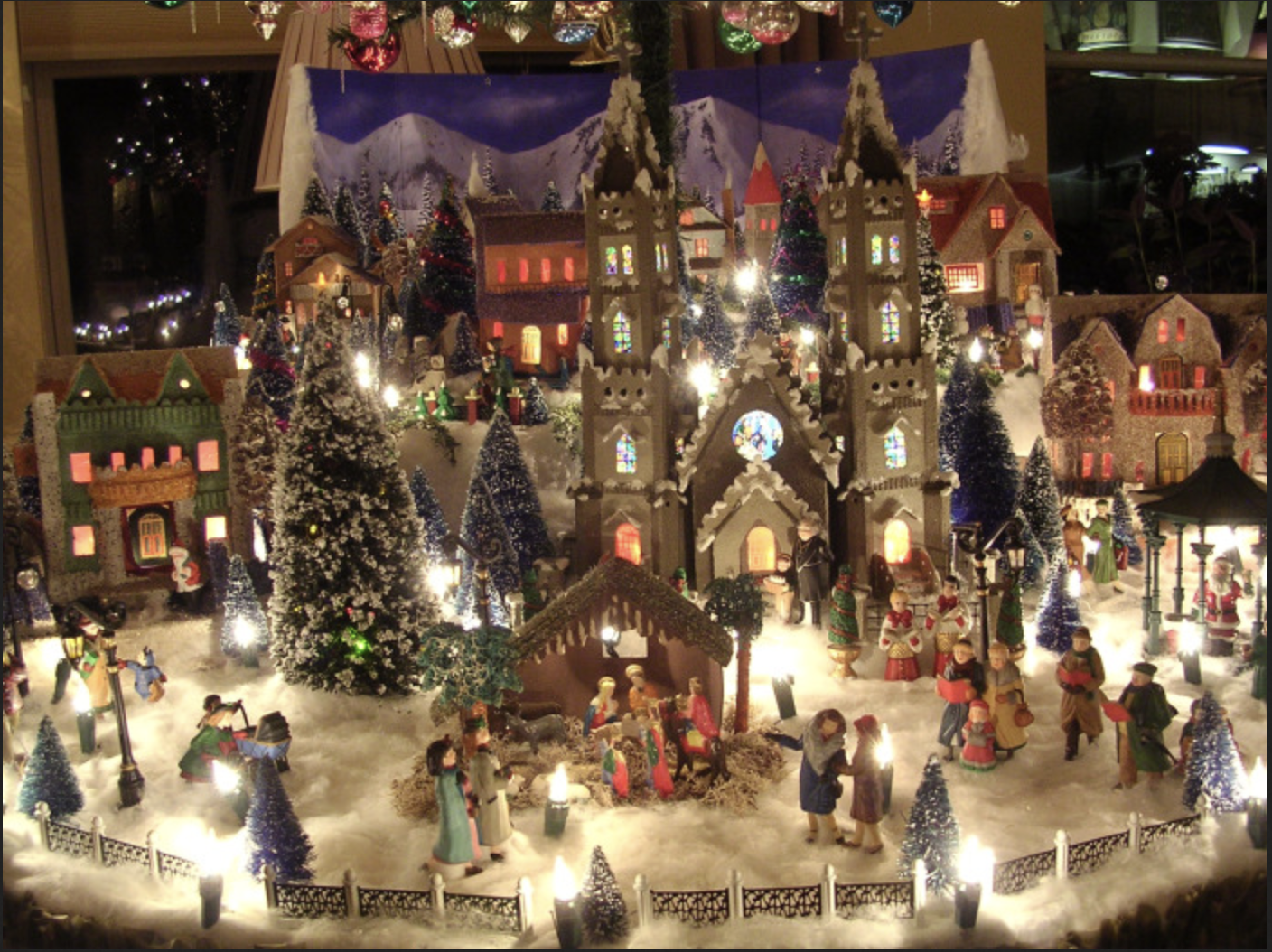
There's no wrong way to display your putz houses!. Displays run the full spectrum from grand villages that fill an entire tabletop to three little houses on a windowsill. They’re so festive with greenery or bottle brush trees on your fireplace mantel or holiday table. I love to fill little corners or shelves around our house with little wintry scenes in a glass cloche, on a cake stand or old thrifted silver trays to create fun little ways to decorate for the holidays.
Unpacking and setting up our putz houses is one of my favorite traditions. The kind of unhurried, hands on creativity that makes space for conversation and sharing memories — the antithesis of the holiday rush!
Make Your Own Putz Houses!
While my love for putz houses started with a set I found in my grandparents’ attic, it was the time we spent repairing the houses together I treasured most. Those memories are why I started making putz house kits, so you could slow down, and craft holiday memories making them yourself or with family and friends.
Ready to start your own village? Browse through my Beginner-Friendly Christmas Village Kits! Each Mini or Tealight size kit contains pre-cut white pieces you can simply assemble or add paint and glitter to create your own nostalgic putz style houses! For more details see my FAQ page!
In addition to the easy to follow directions with each house, my Little Paper Houses Blog has step by step illustrated Putz House Tutorials to guide you through assembling, glittering and adding snow!
Welcome to the wonderful world of putzing!
Sources & Further Reading
If you’d like to learn even more about the history of these little houses, here’s a few resources worth bookmarking:
The History of Cardboard Christmas (Putz) Houses — Cardboard Christmas THE most comprehensive & fascinating history of putz houses
The History of the Putz Village — Golden Glow of Christmas Past